
Chogyam Trungpa Rinpoche explains how one becomes a Buddhist by taking refuge; “we are committing ourselves to freedom.”
See full article on the meaning of Taking Refuge in The Buddha, The Dharma and The Sangha
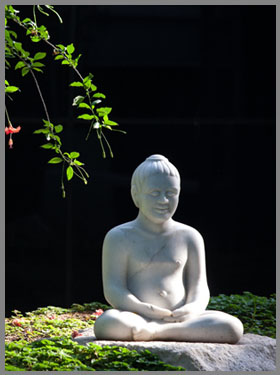
Chogyam Trungpa Rinpoche explains how one becomes a Buddhist by taking refuge; “we are committing ourselves to freedom.”
See full article on the meaning of Taking Refuge in The Buddha, The Dharma and The Sangha
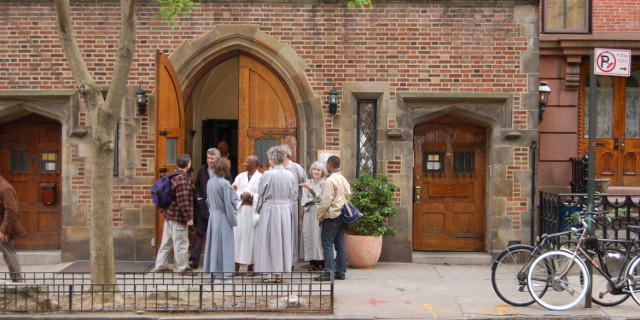
Located in Boerum Hill, Brooklyn since 2000 (after a number of years on W. 23rd St. in Manhattan), the Zen Center of New York City, is home to a thriving practice community.
The Zen Center of New York City: Fire Lotus Temple is the city branch of Zen Mountain Monastery, the main house of the Mountains and Rivers Order. Supporting home practitioners in the metropolitan area, ZCNYC offers workshops, meditation intensives, a daily sitting schedule, and even a residency program. Newcomers are invited to attend the beginning instruction in zazen that follows the Sunday morning service each week.
Please enjoy the video and visit zcnyc.mro.org for more information. What a wonderful example of a thriving sangha.

One of the most common assumptions about Buddhism: vegetarianism. There are differences of opinion between Buddhists on this issue so here is a short article on those who believe that vegetarianism is necessary for Buddhists and those who do not. According to Buddhanet.net, Vegetarianism was not a part of the early Buddhist tradition and the Buddha himself was not a vegetarian. The Buddha got his food either by going on alms rounds or by being invited to the houses of his supporters and in both cases he ate what he was given. Before his enlightenment he had experimented with various diets including a meatless diet, but he eventually abandoned them believing that they did not contribute to spiritual development. Read article.

Forget all the fancy meditation practices, says His Holiness the Dalai Lama, the real heart of Buddhism is complete commitment to others. In this commentary on The Way of the Bodhisattva, he describes the awakened heart of the Buddha, which is his vow to attain enlightenment for the sake of all sentient beings. Read on

Following his stroke last November, Zen teacher Thich Nhat Hanh has spoken his first words. Read the update from Plum Village and enjoy this short guided meditation on returning to the present moment.

Artist Meredith Monk receives the 2014 National Medal of Arts from President Obama. Read her article, “The Art of Being Present,” on how her art and dharma practice intertwine.

Taking care of the little (and not-so-little) ones can be a challenge, but that doesn’t mean that “mindful parenting” has to be an oxymoron. Here are some simple tips from Karen Maezen Miller.

Pema Chödrön, one of the most popular American-born teachers of Buddhism, reminds us of a simple technique we can use anytime we need a break from our habitual patterns. Pema is a fully ordained Buddhist nun who is dedicated to the establishment of a Buddhist monastic tradition in the West. Read on.

Mindfulness is a medicine for our suffering, says Thich Nhat Hanh. Since his stroke last year, the Buddhist master has been recovering remarkably. This teaching is offered as a tribute to Thay and his good health. Read on.

Pema Chödrön and Jack Kornfield, two of America’s most respected and beloved Buddhist teachers discuss the wonderful difficulties of life. Follow Pema’s and Jack’s conversation on how everyday difficulties can provoke us and reveal our habitual patterns. Read on.